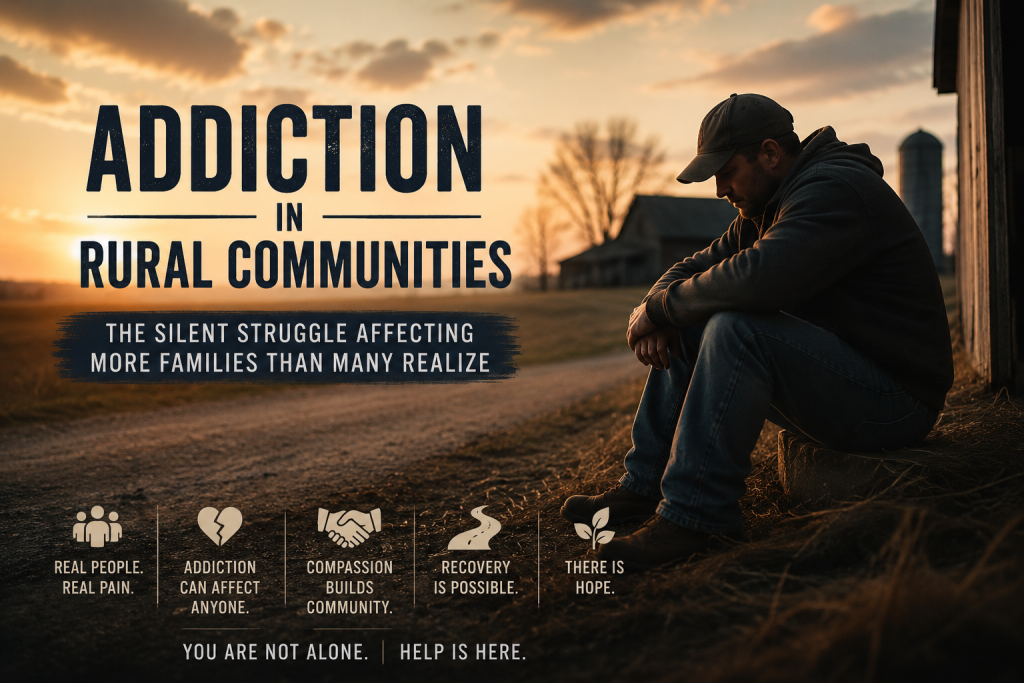
When most people picture addiction, they often imagine it happening somewhere else.
Somewhere far away.
Somewhere in a big city.
But addiction has deeply impacted rural communities across America for years — and many rural families are carrying this burden quietly behind closed doors.
Farmers.
Ranchers.
Oilfield workers.
Truck drivers.
Mothers.
Fathers.
Teenagers.
Veterans.
Professionals.
Good people.
Hardworking people.
People who often feel like they have to hold everything together while silently falling apart inside.
And in many rural communities, addiction is still surrounded by silence, shame, and stigma.
But the numbers — and the stories — tell us this is a growing crisis that deserves attention, compassion, and honest conversation.
Addiction in Rural America Is a Serious and Growing Problem
According to the Centers for Disease Control and Prevention (CDC), drug overdose deaths in rural America have risen dramatically over the last two decades.
One CDC report showed that from 1999 to 2019:
- Drug overdose death rates in urban counties increased from 6.4 to 22 deaths per 100,000 people
- Rural counties increased from 4.0 to 19.6 deaths per 100,000 people
And while some national statistics today show slightly higher overdose rates in urban areas overall, rural communities continue to face devastating impacts because of:
- limited treatment access
- isolation
- slower emergency response times
- stigma surrounding help-seeking
- fewer mental health resources
- fewer addiction recovery programs nearby
The CDC has also stated that overdose deaths in rural areas have at times surpassed urban areas, especially during parts of the opioid epidemic.
Rural Communities Often Have Fewer Resources — But Equal Levels of Addiction
One of the biggest misconceptions is that addiction is less common in rural communities.
That is simply not true.
Research shows that while some forms of illicit drug use may be reported less often in rural areas, the rates of substance use disorders are often similar between rural and urban populations.
The difference is that rural communities often have far fewer resources available when people need help.
One rural health report found that only about 6% of rural residents received substance use treatment in the past year, which was roughly half the rate of urban residents.
Another study found that:
- 74% of rural counties had low-to-no capacity for certain opioid treatment medications
- compared to 48% of urban counties.
That means many rural people are trying to battle addiction with limited support nearby.
Opioids and Methamphetamine Have Hit Rural Areas Especially Hard
The opioid crisis has devastated countless rural communities.
Prescription painkillers, fentanyl, heroin, and methamphetamine have all left lasting damage across rural America.
Research has shown:
- Rural individuals were significantly more likely to misuse prescription opioids in some populations studied
- Rural young adults have shown higher rates of methamphetamine misuse compared to urban peers
- Rural youth historically report higher rates of alcohol and tobacco use compared to urban youth
And unfortunately, many rural families personally know someone affected.
A national poll found that:
- 42% of rural Americans reported that they or a family member had experienced opioid addiction
- compared to 30% in suburban areas
- and 23% in urban areas.
That is staggering.
Why Addiction Can Become So Hidden in Rural Communities
Addiction in rural areas often grows quietly.
Because many rural people are incredibly skilled at surviving.
They work through pain.
They show up exhausted.
They continue carrying responsibility even when overwhelmed.
And many people were raised believing:
- “You handle your own problems.”
- “Don’t burden other people.”
- “Keep moving.”
- “Push through it.”
So instead of asking for help…
many people try to numb stress privately.
Alcohol becomes a way to shut the mind off.
Prescription medications become a way to keep functioning.
Meth or stimulants become a way to stay awake and productive.
Other addictions become attempts to escape pressure, grief, trauma, loneliness, or emotional exhaustion.
Not because people are weak.
But because overwhelmed nervous systems eventually look for relief.
Addiction Is Often About Pain — Not Character
This is important.
Most people struggling with addiction are not bad people.
Many are deeply hurting people.
People trying to:
- quiet anxiety
- numb emotional pain
- escape hopelessness
- manage chronic stress
- sleep
- feel something again
- stop feeling overwhelmed
Addiction often begins as temporary relief.
But over time, it slowly takes more and more from a person’s life.
It affects:
- marriages
- parenting
- finances
- health
- trust
- confidence
- emotional stability
- community connection
And sadly, many people continue suffering in silence because they fear being judged.
The Rural Stigma Around Addiction
In small communities, privacy can feel impossible.
People may fear:
- being recognized entering treatment
- gossip
- embarrassment
- appearing weak
- losing respect
- damaging their reputation
So many people hide addiction far longer than they should.
And many families quietly carry enormous emotional pain while trying to appear “fine” publicly.
What Rural Communities Need More Of
Rural communities are incredibly good at helping during visible emergencies.
But emotional struggles are often invisible.
And invisible pain is easy to miss.
We need more conversations that remind people:
- Recovery is possible
- Asking for help is not weakness
- Strong people need support too
- Addiction can affect anyone
- Silence often makes things worse
- Healing happens through connection
What Actually Helps
1. Earlier Conversations
Many people wait until addiction has severely damaged their lives before seeking help.
Early conversations matter.
2. More Connection
Isolation fuels addiction.
Healthy connection protects against it.
People need trusted relationships.
3. Reduced Stigma
Shame keeps people trapped.
Compassion helps people heal.
4. Access to Treatment
Rural communities need more:
- counselors
- recovery programs
- support groups
- addiction specialists
- telehealth services
- crisis resources
Because people cannot recover if help is impossible to reach.
5. Teaching Real Coping Skills
Many addictions are attempts to regulate overwhelming stress.
That means recovery often includes learning:
- emotional regulation
- stress management
- breathing skills
- healthier routines
- physical activity
- sleep recovery
- community involvement
- purpose and meaning
Real resilience is not pretending life is easy.
It is learning how to carry difficult things in healthier ways.
Final Thoughts
At Rhino Resilience, we believe rural communities deserve honest conversations about addiction without shame or judgment.
Because addiction is not just a “city problem.”
It is a rural issue too.
And behind many addiction struggles are good people carrying more pain than anyone realizes.
You’ve been carrying an enormous load.
Now let’s make sure you’re carrying it in a way that allows you to keep living, leading, and staying connected.
Stay steady… we’re in this together.
