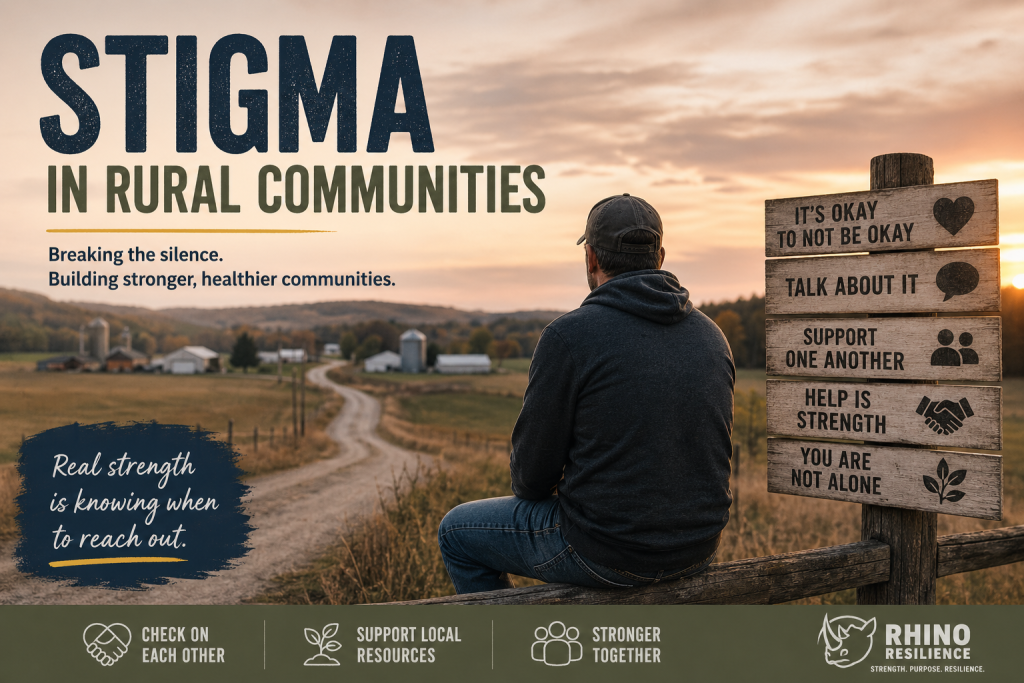
In many rural communities, people pride themselves on being strong, dependable, and able to handle life’s challenges. Those values are powerful. They help families survive hard seasons, weather uncertainty, and keep moving forward when life gets heavy.
But sometimes those same strengths can create an invisible barrier.
That barrier is stigma.
Stigma keeps people silent when they are struggling. It convinces good people that asking for help means weakness. It causes many to suffer alone when support could change everything.
For rural communities, stigma may be one of the biggest hidden obstacles to mental health and wellbeing.
What Does Stigma Look Like in Rural Communities?
Stigma is not always obvious. It does not always come in harsh words or direct judgment.
Sometimes stigma sounds like:
- “Just tough it out.”
- “Other people have it worse.”
- “We don’t talk about that.”
- “Handle your own problems.”
- “You don’t need help.”
- “People will think I’m weak.”
Sometimes it shows up as silence.
A farmer keeps pushing through exhaustion.
A teacher cries in private after work.
A parent feels overwhelmed but says nothing.
A young person struggles with anxiety but hides it.
A first responder carries stress home every night.
They keep going—but they keep carrying it alone.
Why Stigma Hits Harder in Rural Areas
Rural communities often face unique realities that make stigma stronger.
1. Everyone Knows Everyone
Small towns can be deeply supportive—but they can also feel highly visible.
Many people worry:
- “What if someone sees me going to counseling?”
- “What will people say?”
- “I don’t want rumors.”
That fear alone can stop someone from reaching out.
2. Strength Is Highly Valued
Rural people often take pride in grit, work ethic, and resilience. Those are admirable traits.
But sometimes people confuse strength with never needing support.
Real strength is not carrying everything alone forever.
3. Limited Resources
Some communities may have fewer providers, longer wait times, or long travel distances. When help already feels difficult to access, stigma becomes an even bigger barrier.
4. Generational Beliefs
Many people were raised in families where emotions were rarely discussed. Pain was managed privately. Survival came first.
Those beliefs may have helped past generations endure hard times—but they can also keep current generations stuck.
The Cost of Stigma
Stigma does not make problems disappear.
It often makes them worse.
When people stay silent too long, stress can become:
- Anxiety
- Depression
- Burnout
- Relationship conflict
- Substance misuse
- Physical health problems
- Isolation
- Hopelessness
Sometimes the people who appear strongest on the outside are carrying the heaviest burdens inside.
How Rural Communities Can Break the Cycle
The good news is this: stigma can change.
It starts with conversations, leadership, and courage.
Normalize Real Conversations
Talk openly about stress, burnout, grief, and mental health the same way we talk about physical injuries.
Redefine Strength
Strength is not pretending. Strength is facing reality and doing something about it.
Check On People
A simple message, phone call, or visit can matter more than you know.
Support Local Resources
Counselors, schools, churches, healthcare providers, and community leaders all play a role.
Lead by Example
When respected people speak honestly about struggles, others feel permission to do the same.
A New Kind of Rural Strength
Rural communities have always known how to endure hardship.
Now the next step is learning that resilience is not just pushing through—it is also knowing when to reach out, recover, and stand together.
Because no one should have to carry everything alone.
And asking for support does not make you weak.
It makes you wise.
Final Thought
The strongest communities are not the ones where no one struggles.
They are the ones where people struggle—and still have each other.
