Born from ancient symbolism. Shaped by challenge. Strengthened by wisdom, science, and quiet faith.
The Rhino Mentality didn’t come from a single book or a single moment. It emerged from decades of listening to rural people tell their stories — the stress, the pressure, the long days, the unexpected storms, and the quiet battles they often fight alone.
For more than 20 years, I’ve sat with farmers, ranchers, parents, teachers, first responders, and rural youth. People with enormous responsibility and even bigger hearts. And I kept asking myself:
What helps someone stay steady when life feels overwhelming?
What gives a person the ability to rise again, even when they’re tired all the way through?
The answers came from many places — ancient traditions, modern neuroscience, human grit, and a deep spiritual grounding that many in rural communities carry quietly and humbly.
This is how the Rhino Mentality was born.
A Philosophy Shaped by Many Sources
1. Ancient Rhino Symbolism
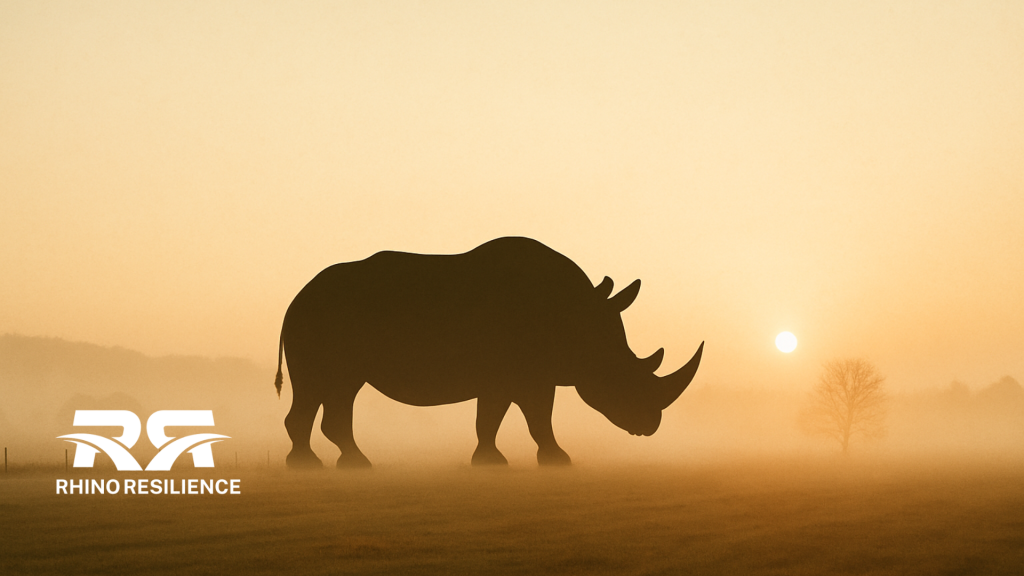
Across cultures, the rhino represents resilience, patience, and grounded strength — a steady giant that rarely charges, but when it does, it moves with clarity and purpose.
For the rural people I’ve served, this symbol fit perfectly:
strong, calm, rooted, and unwavering.
2. A Quiet Trust in Something Larger
Many people in rural communities draw strength from a gentle, personal faith — a belief that they aren’t carrying everything alone, that guidance exists even in the hardest seasons, and that hope can grow where life feels barren.
This isn’t loud or forced. It’s quiet, steady, and deeply personal.
This spiritual grounding is woven into the heart of the Rhino Mentality.
3. Lessons from Abraham Lincoln
Lincoln’s humility, calm leadership, and ability to endure unimaginable pressure helped shape the tone of this philosophy — strength that doesn’t need to shout.
4. Mental Toughness & Modern Neuroscience
Science and performance psychology show us that resilience is built, not born.
We strengthen it by:
- training the mind
- calming the body
- regulating emotions
- returning to focus when life gets loud
This research became a foundational pillar of the Rhino Mentality.
5. Special Operations Quiet Professionalism
The special operations community taught us what it means to stay centered in chaos — strength without ego, purpose without noise, and clarity in the storm.
6. Samurai and Stoic Wisdom
These traditions emphasize:
- self-mastery
- presence
- grounded decision-making
- meeting life as it comes
Their principles fit seamlessly with rural resilience and the Rhino way of life.
Forged in the Realities of Rural Life
The Rhino Mentality was shaped and tested not in theory, but in everyday rural living:
- in the pickup after a long day
- in school hallways where stress hides behind tired smiles
- in late-night kitchen conversations
- in therapy rooms where people finally let themselves exhale
Rural life brings beauty — and it brings seasons of isolation, pressure, exhaustion, and uncertainty.
Over two decades, I learned what truly helps people:
- finding steady ground when everything feels chaotic
- calming the mind and body during moments of pressure
- focusing on what they can control
- drawing strength from values, roots, and personal faith
- taking life one step, one moment at a time
These became the building blocks of the Rhino Mentality.
What the Rhino Mentality Really Means
The Rhino Mentality isn’t about being tough all the time.
It’s not about ignoring stress or pretending you’re unbreakable.
It’s not about carrying everything alone.
It’s about this:
You have more strength inside you than you realize.
You can stay steady even when life feels loud.
And you don’t have to rise alone.
Resilience is something you build — through practice, presence, perspective, and grounded purpose.
This is the foundation of Rhino Resilience.
This is the mindset I’ve seen transform lives.
And this is the quiet truth at the center of the Rhino Mentality:
You are capable.
You are resilient.
And you can rise through anything.
