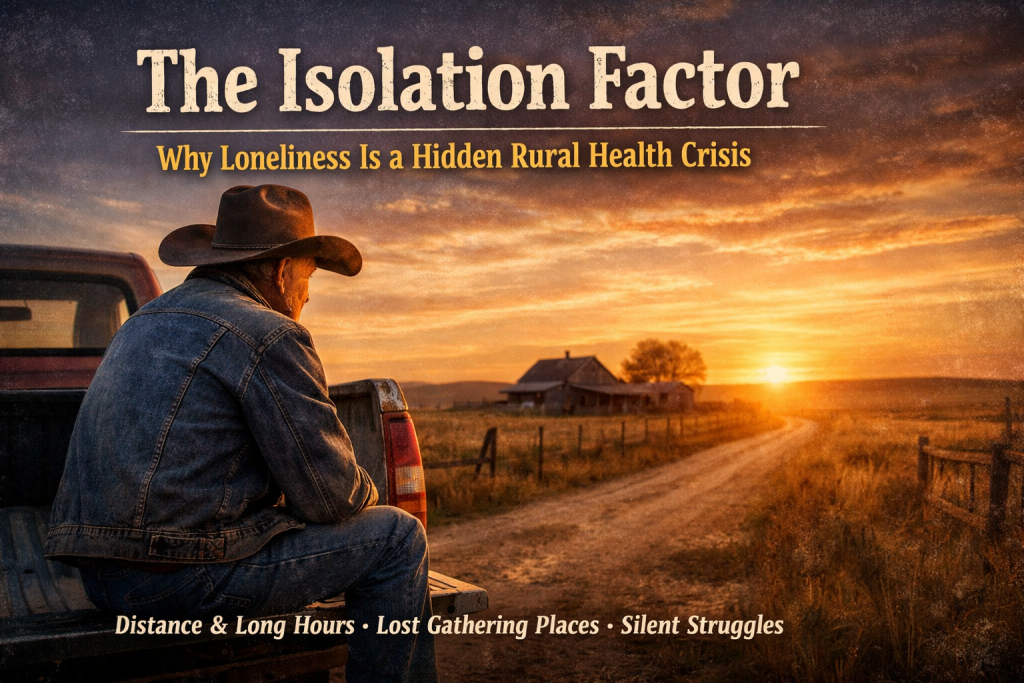
Rural Life Is Strong—But It Can Also Be Isolating
Rural life is something many people are proud of—and rightfully so.
It’s built on hard work, independence, and taking care of your own.
But there’s a side of rural life that doesn’t get talked about enough…
Isolation.
Not the kind you see on the surface—
but the quiet kind that builds over time.
The kind where:
- You go days without a real conversation
- You carry stress alone because “that’s just what you do”
- You feel disconnected… even while surrounded by people
And here’s the truth:
Loneliness isn’t just emotional—it’s a real health risk.
Why Isolation Hits Rural Communities Differently
1. Geographic Distance Creates Emotional Distance
In rural areas, distance is part of life.
Neighbors aren’t next door.
Friends aren’t five minutes away.
Running into someone isn’t guaranteed—it’s planned.
Over time, that physical distance can quietly become emotional distance.
You don’t mean for it to happen…
it just does.
2. Long Work Hours Leave Little Room for Connection
Rural life doesn’t run on a 9-to-5 schedule.
- Early mornings
- Late nights
- Seasons that demand everything you’ve got
By the time the day is done, connection feels like one more thing on a long list.
So it gets pushed aside.
Not because it doesn’t matter—
but because you’re tired.
3. The Loss of Gathering Places
There was a time when connection happened naturally.
- Local cafés
- Small-town bars
- Churches and community events
- Coffee shops where everyone knew your name
But many of those places are disappearing.
And with them…
so are the natural opportunities to connect.
4. Pride Keeps People Silent
This might be the biggest factor of all.
Rural people are strong.
But sometimes that strength turns into silence:
- “I’ll handle it myself.”
- “I don’t want to burden anyone.”
- “Others have it worse.”
So instead of reaching out…
You carry it alone.
Why Loneliness Is More Than Just a Feeling
Loneliness isn’t just about feeling disconnected.
It affects:
- Mental health (anxiety, depression, burnout)
- Physical health (increased stress, heart strain, fatigue)
- Decision-making and focus
- Overall quality of life
In many ways, chronic loneliness can be just as harmful as other major health risks.
And in rural communities, it often goes unnoticed.
The Truth: You’re Not the Only One Feeling This Way
Here’s something important to understand:
A lot of people around you feel the exact same way… they’re just not talking about it.
That’s how isolation grows.
Not because people don’t care—
but because no one wants to be the first to say something.
How to Start Breaking the Isolation Cycle
You don’t need to overhaul your life overnight.
Small, intentional steps can make a real difference.
1. Reconnect Locally (Even in Small Ways)
Start simple:
- Grab coffee with someone you trust
- Stop and talk a little longer than usual
- Check in on a neighbor
Connection doesn’t have to be big to matter.
2. Prioritize Community—On Purpose
Connection doesn’t always “just happen” anymore.
You may need to create it:
- Attend local events—even if you don’t feel like it
- Join a group (church, volunteer, coaching, school activities)
- Show up consistently
Community is built through repeated presence.
3. Be the One Who Reaches Out
This is where real change happens.
Send the text.
Make the call.
Invite someone over.
You might feel like you’re the only one needing it…
But chances are, they need it too.
4. Redefine Strength
Strength isn’t just pushing through alone.
Real strength is knowing when to connect.
If you saw someone walk into a building because they broke their leg…
you wouldn’t judge them.
This isn’t any different.
Final Thoughts: Quiet Strength Includes Connection
Rural communities are built on resilience.
But resilience doesn’t mean isolation.
It means:
- Standing strong
- Staying steady
- And knowing you don’t have to carry everything alone
If this resonates with you, take one small step today.
Reach out.
Reconnect.
Start somewhere.
Because isolation doesn’t have to be the norm.
Call to Action
If this message hit home, share it with someone who might need it.
And if you’re looking for more tools to build calm strength and grounded resilience, explore more at Rhino Resilience and sign up for the newsletter.
